Learn about Is Affiliate Marketing a Pyramid Scheme? and get complete knowledge about your query.
What is an Affiliate Marketing
You might have seen a person (usually famous) promoting a particular brand, prompting its viewers or readers to buy them with a provided link. That celebrity might be related, unrelated, or involved in the product’s niche. This is known as Affiliate Marketing.
Technically, Affiliate marketing is an advertising strategy where a person (affiliate) is paid to advertise a product on different media, bringing in customers through his influence, authority, or unique advertising skills. A personalized and unique link is being provided to each affiliate, which helps to count the number of customers and the business he generates.
Affiliate is usually paid either by the number of clicks (traffic generated) or an agreed-upon percentage of the orders based on his link. This percentage varies depending upon the nature of the business and the efforts an affiliate puts in, which could be as less as 5% and as large as 50%.
It’s more like a commission agent, where you sell a product and get the commission. All famous brands like Amazon, Airbnb, and Wix rely heavily on affiliate marketing.
Read | How Great Content Will Help You with Link Building
What is a Pyramid Scheme
As defined by New York State Attorney General, “A pyramid scheme is a fraudulent system of making money based on recruiting an ever-increasing number of “investors.” The initial promoters recruit investors, who in turn recruit more investors, and so on. The scheme is called a “pyramid” because, at each level, the number of investors increases.“

In Contrast to affiliate marketing, pyramid schemes are ponzi and bogus, where every recruit invests an amount and a hefty return is promised. A part of the profit of each new recruit is also shared with the recruiter.
In most cases, people are told that their money is being invested in a very profitable business, which gives a mammoth profit. At the start, profit is shared for a couple of months or even a year or two as long as new people are joining the program. When the top of the pyramid sees that the recruitment rate is decreasing, they suddenly disappear with all the money.
A typical example of such a scheme is “Fortune Hi-Tech Marketing,” which recruited several people to sell multiple products with the massive benefit of recruiting more salespersons.
The funny part is those salespersons earned more money from recruiting than selling products. It is also believed that more than 0.1 million people were scammed through this scheme, who have paid a handful of amounts in multiple charges. American Federal regulators later take down this company.
In the history of these Ponzi Schemes, American “Berne Madoff” will always stand out as he looted approximately 50-65 billion dollars from different investors. He was later found guilty and got a punishment of 150 years.
Read | Tips for Outsourcing Link Building
Is affiliate marketing a Scam?
The answer is a big “NO.” Affiliate marketing is a legitimate scheme that provides the promoter with a share of the profit of a legitimate business.
Types of affiliate marketing
There are many types of affiliate marketing, but three of them are well-known.
Unattached Affiliate Marketing
In this type, the affiliate has no correction with the product and the end user. He simply promotes the product mainly through ads vis Google or social media platforms.
It is the easiest of all three affiliate marketing strategies, as affiliate do not have to build their reputation or authority in the product’s niche.
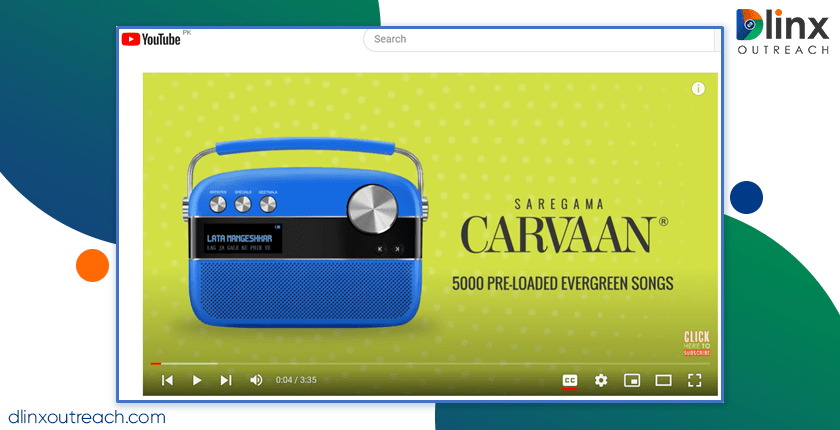
A company usually hires freelancers to run these ads, and the affiliate is paid through per click. The only expertise the affiliate need to have in this type is to access the market and run the ads accordingly.
A typical example is shown in the picture below, where an ad is being run on YouTube.
Related Affiliate Marketing
In this type, an affiliate loosely relates to the niche of his advertising product. From loosely, it means that the affiliate is in the same field, but he has not used that product.
In this type, an affiliate may or may not have little authority. Since the promoter has not used that product, so he might lose the trust of his viewers or readers.
Read | White Hat Link Building Techniques
Involved Affiliate Marketing
This is the most secure and effective way of affiliate marketing. An affiliate is a well-known person in the product’s niche; he already has authority in it, and his followers give a high weightage to his recommendation and reviews.
A typical example of this type is the famous deal of Roger Federer with the Japanese clothing brand Uniqlo after ditching Nike. In this famous and lucrative deal in the sport’s history of $300 million, the Swiss tennis star became the brand ambassador of Uniqlo for ten years. Since Federer is well known and has high authority, the brand agreed to pay a towering amount for marketing, hoping to earn a handsome profit in return.

Types of Scams In Affiliate Marketing
It is said that 2% of the total affiliate marketing share ended up in fraud. Following could be some of the scams in affiliate marketing.
Fake Products
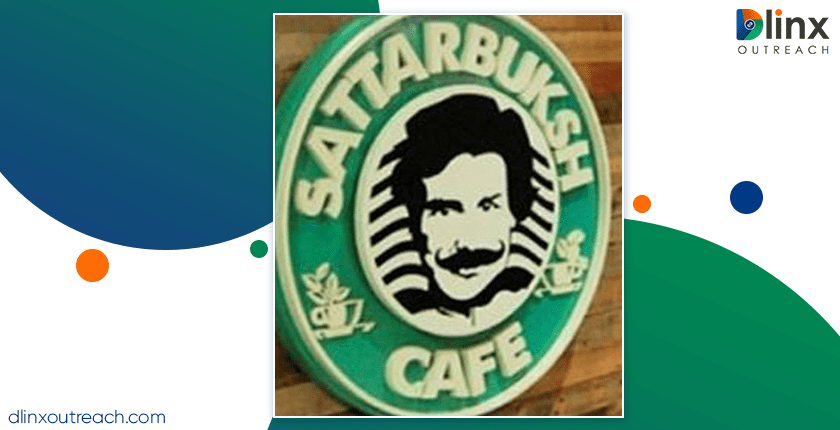
In this case, fraudulent build a page or link of a product that does not exist at all. The fraudulent usually uses the same name as the famous company or a name similar to a renowned brand, confusing the customer. Taking the benefits of confusion, the scammer gets the order.
In the picture below, an eatery used SattarBuksh, similar to Starbucks, to attract customers. Even the logo is identical to Starbucks.
High Commission Rate
If someone offers a high commission on a sale, it’s a big red flag, as a real business never gives a high commission. Such a high and lucrative return, which could be even higher than the actual cost of the product, is not possible, and a scammer is trying to lure you into a ditch.
Read | How to Get a Permanent Backlink?
Joining or Signing in Money
Asking for Joining or sign-in money most likely leads to a scam. Free-to-join programs are always a safer option.
At the same time, some retailers want their affiliates to be well-versed and informed about their products. So they might ask for a small amount to join a program.
In that case, always ask them to show their details and present your trust-building credentials. All such schemes are not fake, so be vigilant and look for the signs before paying.
Hijacking URLs and Ads
According to a researcher (sic) at Cambridge University, “It doesn’t matter in what order the letters in a word are; the only important thing is that the first and last letter be at the right place.”
The scammer takes the benefits of this human psyche by naming a domain strikingly similar to the famous brand but skipping or changing the middle alphabet. They also make the website identical to the real one. People often mislead to fraudulent websites and click on spammy backlinks and leads, which lead to your site.
On a similar ground, fraudulent take the leverage of Google’s Network by posting ads just a typo away from the original brand. The visitor might click on a fake ad, and the creator gets the traffic increase credit.
Read | Difference Between Backlinks And Link Building?
Cookie Stuffing and Spoofy Traffic
In cookie stuffing, scammers usually track the cookies of a person by hijacking his device. This way, users unknowingly click on the link, and affiliates generate illegitimate traffic and earn a commission.
Similarly, an affiliate hires a group of people who keep clicking on ads and backlinks while changing their IPs. In this way, they generate high traffic. An affiliate gets the commission basis on the per click; in Contrast, a retailer hardly gets a business, as this traffic is fake and has no interest in your product.
Fraude Transaction
In such cases, the affiliate asks for a transaction in person rather than to the website’s main page. This way, the affiliate will get the money and eventually vanish.
On the way around, a stolen account or credit card is used to pay via an Affiliate’s account, damaging the credit card/account holder and the affiliate. This might not affect the main company but deteriorate the affiliate’s reputation.
How to Avoid Scams
Most scammers exploit your less operational knowledge and undue trust in your affiliates. Following are some of the tips to mitigate scams.
Evaluate Affiliate
A strict process should be in place to evaluate the credibility of affiliates. Talk to them and try to learn how they are trying to generate traffic.
Check the Conversion Rate
Is it the number of clicks that matters? No, it’s the conversion rate that brings in the actual business. Keep monitoring and accessing the conversion rate of each of the affiliates.
Compare the number of clicks and conversion rate, and scrutinize those affiliates with high clicks but low conversion rates. Then check their click; you will find a fishy pattern in it.
Well Written Contract
Write a contract with every detail in it. Clearly define the key performance indicators so that you can access the goal and objectives at the expiry of the contract. Devise a strict anti-fraud policy against scammers and implement them. Write a detailed contract, and keep the following items in mind;
- Number of clicks or visitors
- The conversion rate of those clicks
- The authenticity of these clicks
- Mode and time of payment
- Duration of business
- Cancellation of contract using illegal means
Monitor Affiliate Links
Ask the affiliate to share the links with you. Check the hosting websites and their relevancy and authenticity. Also, check the IPs of the visitors. If visitors are from different parts of the world where you are not operating, traffic is useless. Then, the affiliate uses a VPN to generate links by hiring people who continuously click with different IPs.
Read | How Much Does Link Building Cost?
Hire an agency
Look for an authentic agency rather than working with a solo freelancer. A legitimate agency will always have its website and complete documentation of its portfolio. Have a details discussion with the agency and check their previous projects for authenticity. A scam by hiring an agency is less likely than a solo freelancer.
Avoiding URL Hijacking and Cloning
Avoid URL hijacking by checking traffic sources and finding domains with similar names. Check these websites and their links. Take legal action if necessary. You can also register the misspelling of your domain, as it will refer the traffic to your domain.
Google Ads Checking
It is also recommended to check the keywords of your Google Ads regularly. If an affiliate has created a bogus ad, it will appear, and you can write to Google to pull it down.
Legal Action
Take strict action against the affiliate using unfair means and tactics to generate traffic. Break the contract, take legal action against him, and do not pay a commission for the links they created, using illegitimate tactics.
Avoid Spammy Clicks
In this type, an affiliate generates spam using unverified apps and extensions, and people click them to generate traffic unintentionally. The best way to avoid them is to use apps verified by Google’s app store and iTunes.
Fake Leads
In this process, scammers steal the personal information of different people from a data resource and then fill in a form using a prescribed link and earn a commission in return.
This can be avoided by carefully analyzing the data. You will see a particular type of pattern in the data, e.g., all information from a specific affiliate is of people from a certain age, sex, and affiliation. This pattern should raise a concern and investigate further to conclude.
Monitoring IP addresses.
Each region has its unique IP address. If your product is available in a particular region, traffic from other areas is useless. Similarly, suppose there is a random pattern in the IPs. Again, it is a matter of concern, as a continuous change in traffic IPs is unfavorable for your regional business.
Try to use IP scanner tools to examine the geological spread of your traffic. This will also give you an idea of whether your traffic is authentic or illegitimate.
Read | How to Get a Permanent Backlink?
Conclusion
Affiliate marketing shares approximately more than 15% of the total marketing budget. Knowing the working principles of this strategy and its pros and cons is essential.
Try to outsource this by hiring a legitimate agency. DLinx Outreach is an agency that takes all your pains and burden and provides legitimate, authentic, and related links with high conversion ratios. Please look at our portfolio and contact us for more information.
Related Articles:
- What is Editorial Backlink
- Do Backlinks Build Authority of a Website
- Link Building Metrics
- What Is Testimonial Link Building
- How to Get Natural Backlinks
- What Is Manual Link Building?
- Link Building for New Website
- Is Link Building Still the Most Powerful SEO Strategy?
- How to Get Natural Backlinks for a Website?
- Should Black Hat Link Building be Avoided?